Weekend Read: How the CIA Learned to Stop Worrying and Embrace Partisanship
A politically charged shooting, a public attack on a senator, and an internal revolt over a new covert war reveal an agency crossing lines it once swore to avoid.
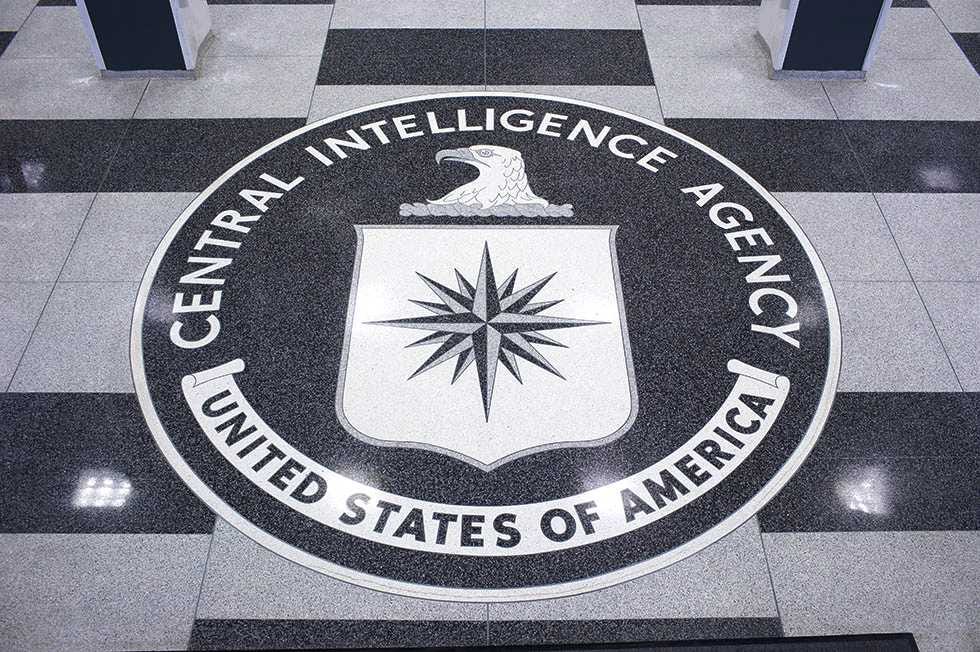
Hours after an Afghan man who had worked with a CIA-backed military unit shot two National Guard members in Washington, D.C., CIA Director John Ratcliffe issued a statement blaming the “disastrous Biden withdrawal from Afghanistan” for bringing the shooter to the United States. The alleged assailant, he said, “should have never been allowed to come here.”
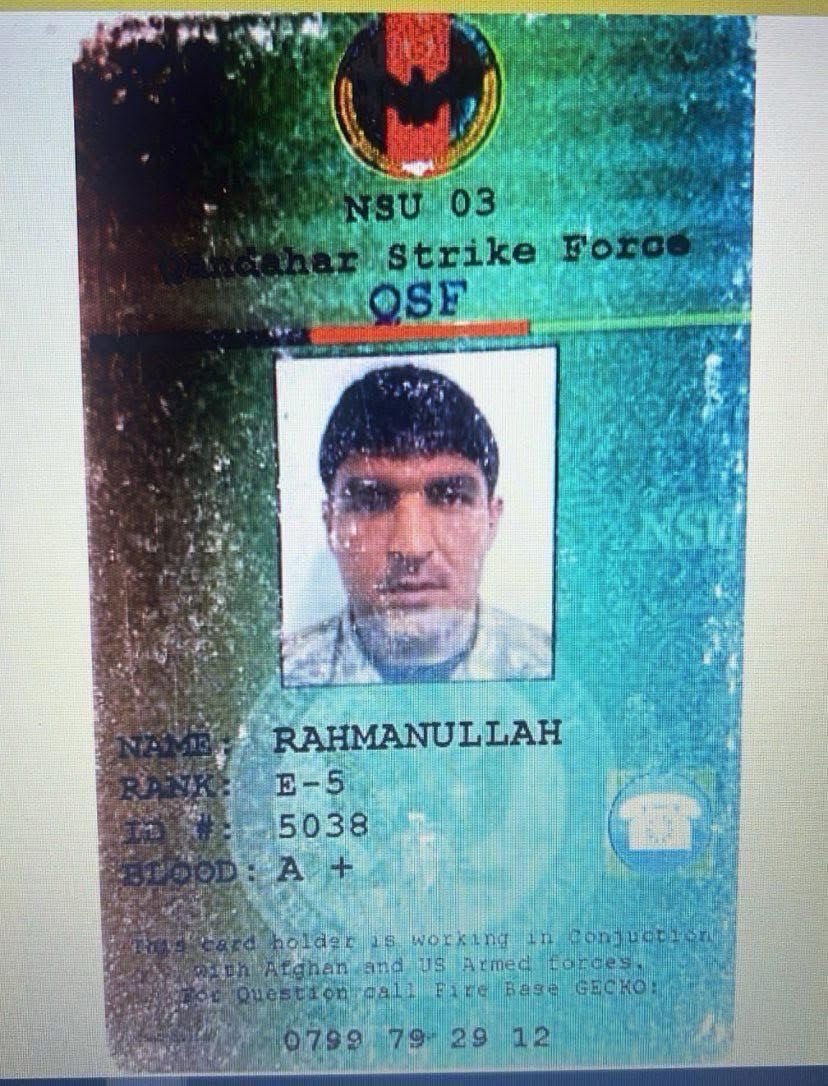
It was a strikingly political move for a director who had pledged to stay out of domestic politics. The alleged shooter, 29-year-old Rahmanullah Lakanwal, had reportedly fought in the late days of the Afghanistan War as part of a “Zero Unit,” a paramilitary force recruited, trained, armed, and overseen by the CIA. Human Rights Watch documented extrajudicial killings, enforced disappearances, indiscriminate airstrikes, and attacks on medical facilities by these units, some of the most serious abuses tied to any US-supported force in the conflict.
One problem with leaping into the fray is that sometimes you end up swallowing your own talking points. Having planted a flag on “It’s Biden’s fault,” Ratcliffe then had to watch that narrative crumble in real time. It turned out Lakanwal’s asylum application was approved in April, after a relatively short five-month wait. And Joe Kent, the head of the National Counterterrorism Center, acknowledged that Lakanwal had already been vetted by the intelligence community for his role in a Zero Unit.
Think about how thorough Lakanwal’s vetting had to be: CIA and US special operations personnel regularly accompanied Zero Units on missions. The CIA Ground Branch, Army Rangers, and Navy SEALs had to trust men like Lakanwal with their lives. Biden’s supposed “sin,” then, was evacuating an Afghan partner who had fought in a CIA-backed unit alongside US personnel, only to now be blamed for not foreseeing the consequences of the very system the intelligence agencies built.
The shooting also unleashed a torrent of conspiracy theories on social media. In a post on X viewed more than 2.6 million times, Lara Logan, a former CBS correspondent turned far-right commentator, asked whether the CIA was “behind the murder” and had “directed/orchestrated this act of war.”
It’s just the latest addition to the CIA’s ever-expanding conspiracy resume: running the drug trade, hiding UFOs, faking the moon landing, killing JFK, MLK, and Bob Marley, orchestrating 9/11, and on and on.
The agency’s traditional public response was to stay neutral, neither confirming nor denying, offering facts and informed perspectives, letting its professionalism speak for itself. But these days, the CIA is behaving in ways that validate the toxic conspiratorial stew that has long swirled around it. The spy agency that insisted it was above politics is now embracing partisanship.
When Langley Attacks
Ratcliffe’s statement wasn’t an isolated moment. A few days earlier, the agency attacked Democratic Senator Elissa Slotkin of Michigan in a public statement larded with MAGA-style rhetoric, another dangerous sign that the CIA may be getting pulled into the domestic politics it has spent decades trying to avoid.
“Senator Slotkin’s assertion that CIA officers are receiving illegal orders and should therefore refuse to follow them is now, by her own admission, without basis and recklessly false,” Liz Lyons, the head of the agency’s Office of Public Affairs wrote on X. “Unfortunately, she has now joined the ranks of disgraced former intelligence officers — including the ‘51 spies who lied’ — who’ve abused their IC credentials to advance a malicious and disingenuous political agenda.”
It was startling to see a press shop that long prided itself on professionalism misrepresent what Slotkin actually said. In the video that enraged Trump, who called it an act of sedition, Slotkin never claimed CIA officers were getting illegal orders.
Old CIA hands and observers could not recall ever seeing anything like it in tone or substance from an agency spokesperson.
“I’ve worked with CIA public-affairs officers since 1987,“ said Tim Weiner, a Pulitzer Prize-winning journalist and author of two CIA histories, Legacy of Ashes and The Mission. “That vicious tone, the MAGA rhetoric, violates the tradition that CIA doesn’t do politics. But Ratcliffe is a political animal, as much an acolyte to Trump as Hegseth or Patel.”
A former senior CIA official agreed: “Sounds like the intemperate, combative and reckless statements that have become all too familiar from White House and Pentagon spokespeople in recent months.”
“The six members of Congress said military and intelligence community personnel can refuse illegal orders and that no one has to carry out orders that violate the law or Constitution,” the former senior officer said. “Is the CIA spokesperson’s position that yes—agency personnel must follow illegal orders?”
It’s a good question and one of several the CIA Public Affairs staff didn’t respond to.
The politicization isn’t just more inside the Beltway drama. Once an intelligence agency embraces partisanship, every estimate it produces becomes suspect. You can’t have your chief spokesperson say that three former CIA directors—Brennan, Hayden, and Panetta—are now “disgraced” for signing a letter about Hunter Biden’s laptop without everyone questioning the objectivity of the CIA’s latest intelligence product on Iran’s nuclear program or the administration’s current obsession, drug cartels.
While Lyons’s and Ratcliffe’s comments won’t reassure anyone that the CIA is providing unbiased intelligence, they will reassure the White House that the agency is fully aligned with the administration’s agenda, including its newest covert mission inside Venezuela.
An Internal Debate on Legality
The public attack on Slotkin makes far more sense in context. Because the opening strike in the administration’s drug-war campaign wasn’t merely aggressive, it was criminal.
The Washington Post reported Friday that Defense Secretary Pete Hegseth issued a spoken directive to SEAL Team 6: “Kill everybody.” When a Sept. 2 airstrike left two survivors clinging to the burning wreckage of their boat, the commanding officer ordered a second “double tap” strike to finish them off. Hegseth denied it, but if the story is true, it’s a textbook war crime. The Peleus war crimes trial, described in a manual of Naval warfare law, ended with a German U-boat captain and two of his men executed at the end of World War II for doing the same thing.
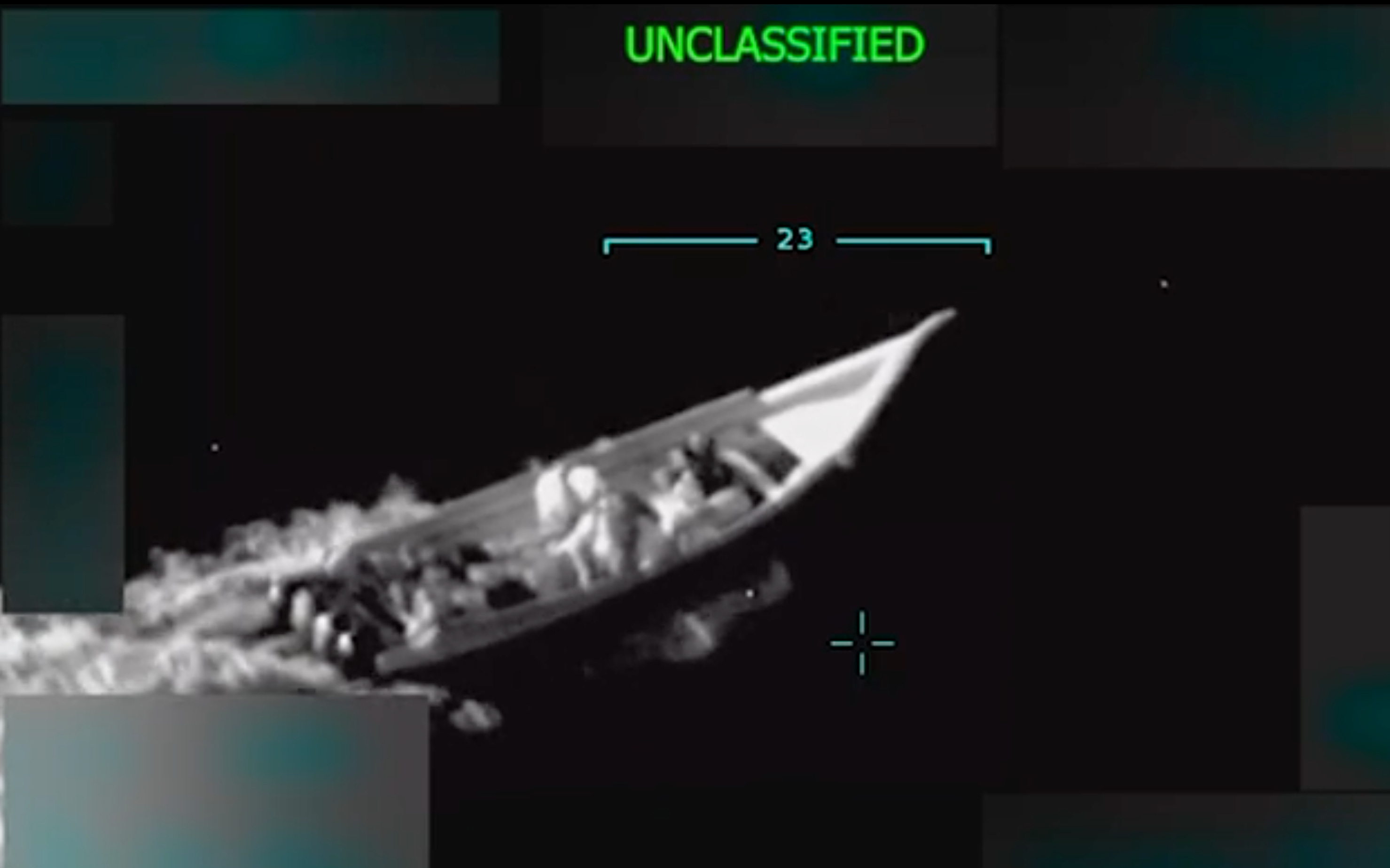
At the CIA, Slotkin’s warning landed in the wake of an internal battle over a draft covert-action finding that would have had the agency itself carry out the administration’s strikes on suspected drug vessels, in a reprise of the war-on-terror drone program that killed legions of terror suspects.
Inside Langley, the core legal objection was simple. “There is no actual threat justifying self-defense—there are not organized armed groups seeking to kill Americans,” one person familiar with the debate told the Post. Until now, similar drug boats were routinely stopped and searched by the Coast Guard and US Navy, not obliterated with Hellfire missiles.
After CIA lawyers pushed back, the administration shifted the operation's execution to the military’s Joint Special Operations Command. To date, 21 strikes in the Caribbean and eastern Pacific have killed more than 80 people, with the CIA providing “the bulk of the intelligence,” according to The Guardian’s Aram Roston.
According to the Post, the concerns inside Langley were serious enough that in September, around the time of the “Kill everybody” boat strike, the CIA’s deputy director, Michael Ellis, stepped in as acting general counsel, replacing a career agency lawyer who had questioned the legality of the strikes. Journalist
identified that displaced lawyer as Michael Vega.The move suggested the agency was clearing legal obstacles rather than heeding legal warnings. The legally fragile campaign, propped up by secret memos, reminded some agency personnel of the mistakes made during the Rendition, Detention, and Interrogation program, which, in its rush to use torture in secret prisons, produced years of scandal, legal exposure, and congressional and Justice Department investigations.
The internal concerns make the CIA’s public posture even more striking. Lyons’s statement and Ratcliffe’s comments in the wake of the National Guard shooting underscored Slotkin’s warning that the administration was “pitting” troops and intelligence professionals against American citizens.
The End of an Era
Whatever else you say about the CIA, the agency’s spokespeople have long run a disciplined operation. Their language is as anodyne as it gets. “We can neither confirm nor deny” is a CIA invention. It can take days to get an answer to a seemingly simple question.
Yes, the Office of Public Affairs tries to shape stories to put the CIA in the best possible light, but it does that (or did, at any rate) by supplying facts, pointing out errors, and building relationships with trusted reporters. Those relationships are critical to the agency when the next big PR crisis hits, as they tend to do every few years.
The CIA’s ties to the press paid off in 1996, when the San Jose Mercury News published “Dark Alliance,” alleging that the Nicaraguan Contras—“the CIA’s Army”—had partnered with LA gangs to sell cocaine in Black neighborhoods and fund their war against the Sandinistas. Even as the story spread rapidly on the Internet and Black talk radio, the agency didn’t publicly denounce the story; other journalists, especially those at the Los Angeles Times, did it for them. (For a good critique of the mainstream media’s response to the Dark Alliance story, see Peter Kornbluh’s essay in Columbia Journalism Review, “The Storm Over Dark Alliance.”)
The CIA’s own doctrine makes Lyons’s and Ratcliffe’s statements even harder to explain. In an internal agency history titled “Managing a Nightmare: CIA Public Affairs and the Drug Conspiracy Story,” a Directorate of Intelligence staffer, Nicholas Dujmovic, laid out the principles intended to govern its public communications. The Office of Public Affairs “aims above all to inform rather than to pressure or to persuade,” Dujmovic wrote.
Written in 1997 and declassified in 2014, “Managing a Nightmare” describes what happens when faith in government evaporates: every mystery looks like a cover-up, and the CIA becomes the villain of convenience. With trust now bumping against historic lows, the agency is again in that danger zone. “At those times, it is especially important to have a professional public affairs staff help limit the damage and facilitate more balanced coverage of CIA,” Dujmovic wrote.
If only. The Office of Public Affairs’ reputation for professionalism is yet another offering sacrificed in the fires of Trump worship. Rather than staying above the fray, the director and his chief spokesperson dove headlong into it. For longtime CIA officials, watching their agency drawn into yet another ugly political debate, that breach of the CIA’s own PR philosophy isn’t just a footnote. It’s an institutional alarm bell.
When the CIA’s chief spokesperson abandons its doctrine of neutrality, when career lawyers who raise legal objections get replaced, when the agency attacks a senator for saying personnel can refuse illegal orders, these aren’t slipups.
The groundwork is being laid for the next major scandal, the one where nobody inside the agency felt empowered to say no.